Greece Index
Find Places of Interest, Hotels, Apartments, Restaurants, Car Rental and Services in Greece
Greece Index
Find Places of Interest, Hotels, Apartments, Restaurants, Car Rental and Services in Greece
The Amazing Honey Bee
Honey bees are fascinating creatures, known for their social behavior and their significant contribution to our ecosystem. These flying insects are native to Afro-Eurasia and have been spread around the world by human activity.
Honey bees are known for their ability to construct intricate wax nests and their remarkable production of honey, a sweet, viscous food that has been valued by humans throughout history. Their unique characteristics and behaviors have made them the subject of extensive study and appreciation.
The global distribution of the honey bee is closely tied to human activity. As humans have traveled and traded across continents, they have intentionally or accidentally introduced honey bees to new environments. For example, European settlers brought honey bees to the Americas, where they have since become naturalized and integral to many ecosystems. These human-assisted migrations have resulted in the cosmopolitan distribution of honey bees we see today.
Honey Bee Characteristics
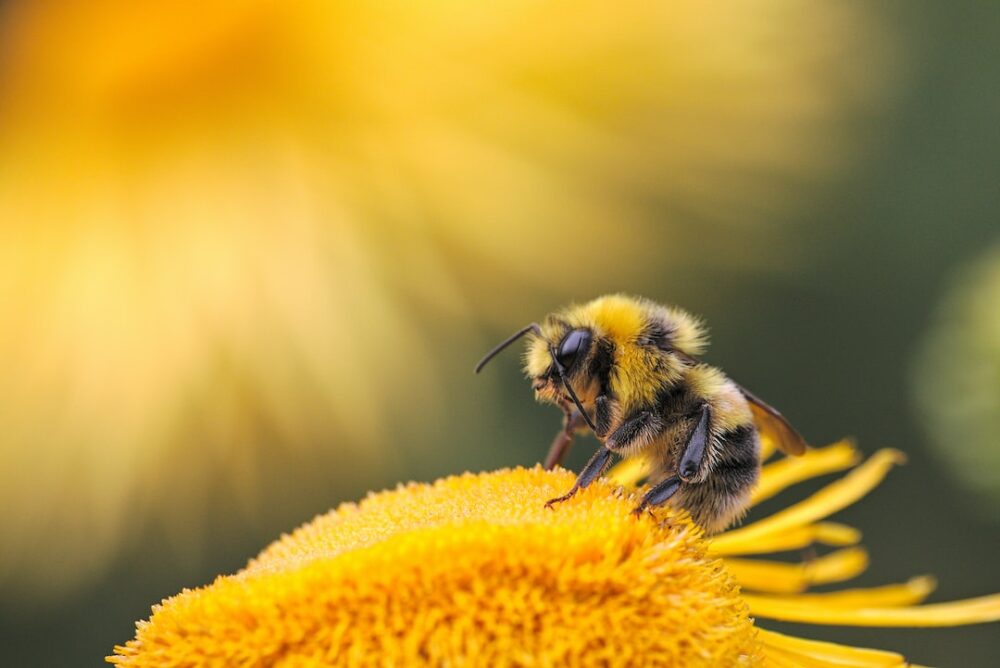
Typically measuring about 1.2 cm in length, honey bees are small but highly organized insects (link). They have compound eyes, simple eyes, and antennae that allow them to sense their environment and communicate with each other. Their bodies are brown with a dull yellow and brown banded abdomen, making them easily identifiable among other insects. Despite their small size, honey bees are capable of complex behavior and communication.
For example, honeybees use their antennae to sense their environment through smell and touch. The antennae also play a critical role in the bees’ sophisticated waggle dance communication. When a worker bee discovers a rich source of nectar, it returns to the hive and performs a complex series of movements, or “waggle dance,” to indicate the direction and distance of the food source to its fellow bees. This demonstrates the remarkable sensory and communication abilities of these small creatures.
Species of Honey Bees
There are eight recognized species of honeybees, with a total of 43 subspecies. These species include:
- Apis andreniformis (Black Dwarf Honey Bee)
- Apis cerana (Eastern Honey Bee)
- Apis dorsata (Giant Honey Bee)
- Apis florea (Red Dwarf Honey Bee)
- Apis koschevnikovi (Koschevnikov’s Honey Bee)
- Apis laboriosa (Himalayan Giant Honey Bee)
- Apis mellifera (Western Honey Bee)
- Apis nigrocincta (Philippine Honey Bee)
The Western Honey Bee (Apis mellifera) and the Eastern Honey Bee (Apis cerana) are the only two species that have been domesticated for honey production and crop pollination
Each honeybee species has adapted to its specific environment and exhibits unique behaviors and characteristics. For example, Apis dorsata, commonly known as the giant honeybee, is native to South and Southeast Asia and builds large, exposed nests on tree branches and rock overhangs. These nests can contain over 100,000 bees and are a testament to the architectural skills of honey bees. Understanding the diversity of honeybee species is critical to their conservation and management.
Honey Bee Life Cycle and Social Structure
The life cycle of honey bees is complex, beginning with eggs that hatch into larvae. These larvae then metamorphose into pupae and finally emerge as adult bees. The time it takes for a bee to develop varies, with queens emerging in 16 days, workers in about 21 days, and drones in 24 days. There is a distinct social structure within a honey bee colony, with roles divided among queens, workers, and drones (link). Each caste has a specific role and responsibility that contributes to the survival of the colony.
- The queen bee, the only fertile female in the colony, has the primary role of laying eggs to ensure the continuation of the hive.
- Worker bees, which are infertile females, perform various tasks such as foraging for food, caring for larvae, and defending the hive.
- Drones, the male bees, have a single role: to mate with a virgin queen. This division of labor ensures the smooth functioning and survival of the hive.

Role of Honey Bees in Pollination
Honey bees play a crucial role in pollination, a process that is vital to the reproduction of many plants. Their foraging behavior, which involves moving from flower to flower collecting nectar and pollen, inadvertently aids in the pollination of plants. This efficient pollination service provided by honeybees contributes significantly to the production of fruits, vegetables, and nuts, adding immense value to the agricultural industry.

A prime example of the importance of honey bees in agriculture is the pollination of almond trees. In California, home to 80% of the world’s almond supply, honey bees are needed to pollinate almond blossoms. Each year, millions of honey bee hives are transported to almond orchards to perform this vital task, demonstrating the central role of honey bees in food production.
Honey Production Process
Honey bees produce honey by collecting nectar from flowers and storing it in wax cells inside the hive. This nectar undergoes a process of regurgitation and evaporation that transforms it into the sweet and viscous substance we know as honey. In addition to honey, honeybees produce other useful substances such as beeswax, bee bread, and royal jelly.
- Beeswax is a natural product secreted by worker bees that they use to build the hexagonal cells of their hives. Humans have found many uses for beeswax, from candle making to cosmetics.
- Bee bread, a fermented mixture of pollen and nectar, is a primary food source for bee larvae.
- Royal jelly, a special substance produced by worker bees, is used to feed queen larvae and young queens.
Beekeeping Practices
Beekeeping, or apiculture, is the practice of maintaining colonies of bees, primarily for the production of honey and other bee products. This ancient practice has significant cultural and economic importance in many regions, including Greece. Beekeeping involves a range of activities, from managing hives and extracting honey to caring for colonies to ensure their health and productivity.

Beekeeping has been practiced for thousands of years, with evidence of honey collection dating back to ancient Egypt and Greece. In Greece, beekeeping has been an important economic activity since ancient times, with honey and beeswax being important trade commodities. Modern beekeeping practices have evolved to include the use of standardized equipment, such as the Langstroth hive, and advanced techniques for managing bee health and productivity.
Threats to Honey Bees
Honey bees face numerous threats, including parasites, diseases, and various environmental factors. Habitat loss, exposure to pesticides, and climate change are among the major threats that have caused honey bee populations to decline. This decline poses significant challenges to agriculture and food production, underscoring the urgency for action to protect these invaluable pollinators.
The Varroa mite is one of the most significant threats to honey bees worldwide. This parasitic mite feeds on the hemolymph (the bee equivalent of blood) of adult and developing bees, weakening them and making them more susceptible to disease.
In addition, the widespread use of pesticides in agriculture has been linked to bee health problems, including Colony Collapse Disorder, a phenomenon in which most of the worker bees in a colony disappear, leaving behind a queen and a few nurse bees.
Conservation Efforts
There are ongoing efforts to protect honey bees. These include creating pollinator-friendly habitats, reducing the use of harmful pesticides, and promoting sustainable beekeeping practices. Conservation organizations and beekeepers play an important role in these efforts, working to raise awareness about the importance of honey bees and taking steps to ensure their survival.
One such effort is the creation of pollinator gardens, which provide a variety of nectar and pollen sources for honey bees and other pollinators. These gardens, planted with a variety of native flowering plants, provide food resources for pollinators throughout the growing season. Reducing the use of pesticides, especially those known to harm bees, is another key aspect of honey bee conservation. Advocating for sustainable agricultural practices and responsible pesticide use can help reduce the risks to honey bees.
Protecting Honey Bees is Critical for Biodiversity
Honey bees are essential pollinators that play a critical role in our ecosystem and food production. Their complex life cycle, social structure, and honey production process make them a fascinating subject of study. Protecting honey bees through informed conservation efforts is critical to preserving biodiversity and ensuring a sustainable future. By understanding and appreciating these remarkable creatures, we can better appreciate their contributions and the urgency of protecting them. Their survival and prosperity are inextricably linked to our own, as their pollination services are vital to the plants that make up the world’s food supply. Through continued research, public awareness and conservation efforts, we can help ensure the future of the honey bee and the essential services it provides.
Read more:
Read more: