Greece Index
Find Places of Interest, Hotels, Apartments, Restaurants, Car Rental and Services in Greece
Greece Index
Find Places of Interest, Hotels, Apartments, Restaurants, Car Rental and Services in Greece
The Holocaust of the Jews of Greece
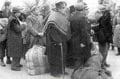
The indigenous Jewish communities of Greece represent the longest continuous Jewish presence in Europe.
These communities, along with those who settled in Greece after their expulsion from Spain, were almost completely destroyed in the Holocaust.
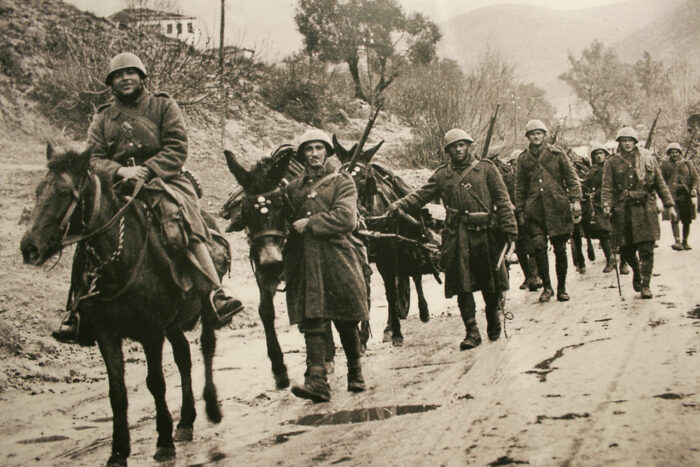
In the spring of 1941, the Germans defeated the Greek army and occupied Greece until October of 1944. The country was divided into three zones of occupation: Bulgaria annexed Thrace and Yugoslav Macedonia; Germany occupied Greek Macedonia, including Thessaloniki, Piraeus, and western Crete; and Italy occupied the remainder of the mainland and the islands.
Where Jews resided determined not only their subsequent fate, but also their ultimate possibility of escape.
The Germans chose March 25, 1944, Greek Independence Day, to deport the Jews of Volos, and any Jews remaining on the Greek mainland. 130 of the Jews of Volos were deported to Auschwitz-Birkenau.
There were 900 Jews in Kastoria in 1940. On March 25, 1944, 763 Jews were rounded up for deportation, first to Thessaloniki and then to Auschwitz-Birkenau. Prior to their deportation, they were enclosed in an abandoned school for days, with no food or water, and the young girls were raped by German soldiers.
On March 25, 1944, the entire Jewish community of Ioannina, 1,860 people, was deported to Auschwitz-Birkenau. Today only 35 Jews live in Ioannina; they are the only remnants of a once thriving Romanniote Jewish community.
Read more about Greek History
Read more: